
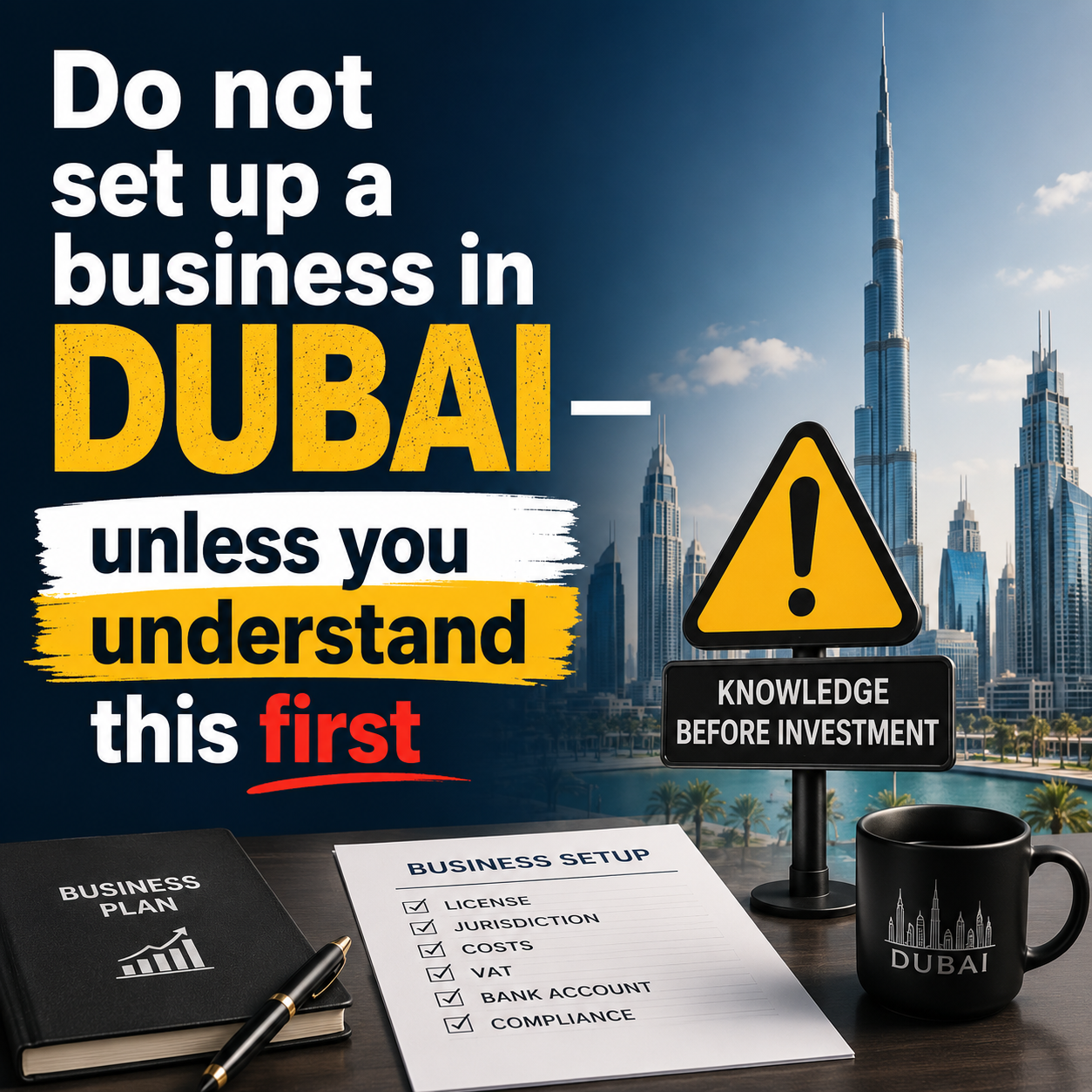
Dubai does not reward proximity. It rewards preparation.
The founders who arrive here with clarity — about what they offer, who they serve, and how they intend to operate — find that this city accelerates everything. The founders who arrive chasing the lifestyle, the optics, or the vague sense that “the opportunity is here somewhere” find that it accelerates that too. Confusion. Overspend. Misplaced time.
Dubai is not a city. It is an amplifier. The signal it strengthens is the one you bring with you.
What follows is not a setup guide. It is a thinking guide — the five things that genuinely determine whether Dubai works for a founder. Most business advisors do not explain these because they are not structural. They are strategic.
Dubai runs on proximity — but proximity must be earned
The single most powerful force in Dubai’s business environment is the density of decision-makers in a remarkably small geography.
In most global cities, access is mediated by layers of gatekeeping — PA systems, long sales cycles, institutional hierarchies. In Dubai, a founder in the right room, at the right event, in the right building can have a conversation on a Tuesday that materially changes their business by Thursday. This is not hyperbole. It is the lived experience of every serious operator who has built here.
But proximity is not passive. It is not achieved by attending every networking event, joining every WhatsApp group, or moving into the most visible office in DIFC. The proximity that produces outcomes is the kind built on a clear value proposition and a genuine reason for the other person to continue the conversation.
Founders who arrive with “I’m building something in fintech” get polite nods. Founders who arrive with “I solve a specific problem for a specific type of institution and here is the evidence it works” get second meetings. Dubai’s decision-maker density does not compensate for strategic vagueness. It merely exposes it faster.
“One conversation can change your business here. But only if you come to the conversation prepared to be specific.”
━━━━━━━━━━━━━━━━━━━━━━━━━━━━━━━━━━━━━━━━
Speed is a competitive advantage — and a stress test
Dubai moves faster than almost any comparable business environment. Decisions that take six months in London or Frankfurt can happen in six weeks here. Deals close at a pace that feels disorienting to founders arriving from more bureaucratic markets.
This is genuinely one of Dubai’s most valuable characteristics for founders who are ready for it. The ability to compress timelines — on licensing, on banking, on securing anchor clients — means that a business that would take three years to establish in a European market can reach operational stability here in twelve months.
The stress test is on the other side of the same coin. The founder who is not ready — whose team is not in place, whose product is not yet differentiated, whose pricing has not been stress-tested — will find that Dubai’s speed amplifies their gaps as effectively as it amplifies their strengths. A market that moves fast does not slow down to let you catch up.
The practical implication: do the preparation work before you arrive, not after. The founders who use the early months in Dubai to figure out their positioning are using the market’s most valuable resource — speed — on a problem they could have solved elsewhere.
━━━━━━━━━━━━━━━━━━━━━━━━━━━━━━━━━━━━━━━━
Your reputation becomes your currency — and it travels fast
Dubai’s business community is, for its scale, surprisingly concentrated. The C-suite of most major industries — financial services, real estate, technology, advisory — knows each other. Word travels quickly in both directions.
A founder who delivers consistently — who does what they say, who operates with transparency, who produces demonstrable results — builds a reputation that opens doors they never actively knocked on. This compounding effect of trust is one of the most underrated dynamics in the Dubai market and one of the clearest advantages for serious, long-horizon operators.
The inverse is equally true. A founder who overpromises, who chases visible wins without delivering substance, or who treats relationship-building as a transactional exercise will find their reputation has formed before they intended it to. In a concentrated market, the signal travels quickly. Negative signal travels faster.
Dubai respects value creators. Not noise creators. The distinction sounds obvious. In practice, many founders confuse the two — mistaking visibility for credibility and activity for results. In a market that moves fast and where reputations compound, the cost of that confusion is not forgiving.
━━━━━━━━━━━━━━━━━━━━━━━━━━━━━━━━━━━━━━━━
The environment upgrades your thinking — if you let it
There is a cognitive shift that happens to founders who operate seriously in Dubai for twelve months or more. It is difficult to attribute to any single cause, but it is reliably reported and it is real.
Operating in an environment where your immediate peers are building at a global scale — where conversations casually span Southeast Asia, Africa, Europe, and the Gulf in a single meeting — recalibrates what you consider possible. A founder who arrives thinking about their domestic market often leaves thinking about three continents. Not because Dubai is particularly cosmopolitan in a surface sense, but because the operating assumption here is global by default.
This environmental upgrade in thinking is one of Dubai’s most undervalued returns. It does not show up on a balance sheet. But it compounds. Founders who have operated here describe a permanent shift in the scale at which they conceive of problems and the ambition at which they define success.
The condition for accessing it is genuine operational engagement — not a visa, not an office, not a registered entity. It requires showing up consistently, operating professionally, and being present in the rooms where these conversations happen rather than observing from the periphery.
━━━━━━━━━━━━━━━━━━━━━━━━━━━━━━━━━━━━━━━━
The structural decisions that most founders get wrong
After the strategic principles, there are practical structural decisions that determine whether a Dubai business setup serves its intended purpose or creates friction for years.
The first decision is entity type. Mainland versus free zone is not a binary of good and bad — it is a question of what you need your entity to do. A free zone licence is faster, cheaper, and well-suited to service businesses operating internationally. A mainland licence provides access to the UAE’s local market without a local partner requirement (post-2021 reforms), and is essential for businesses whose primary market is within the UAE. Getting this wrong at setup requires costly restructuring later.
The second decision is banking. UAE corporate banking for non-resident founders remains one of the most underestimated friction points in Dubai business formation. Without a functioning relationship with a UAE bank, operational velocity is significantly constrained. This relationship should be initiated as early as possible in the setup process — not treated as an administrative step to complete after everything else.
The third decision is residency alignment. For founders making a serious long-term commitment, the Golden Visa threshold and the personal tax planning implications of UAE residency interact with the business entity choice in ways that have material impact on the overall structure. These should be considered together, not sequentially.
None of these are complicated decisions with access to the right advisory input. All of them become expensive if deferred or decided without proper context.
━━━━━━━━━━━━━━━━━━━━━━━━━━━━━━━━━━━━━━━━
Same city. Different mindset.
The founders who struggle in Dubai are not less capable than those who build life-changing businesses here. They are usually less prepared — not in the practical sense of entity structures and bank accounts, but in the strategic sense of knowing precisely what they are building, for whom, and why Dubai is the right operating environment for it.
Dubai does not manufacture success. It accelerates the conditions you bring to it. Clarity scales. Discipline compounds. Reputation travels. The preparation that most founders defer — the strategic positioning, the structural decisions, the thinking about long-term capital and residency alignment — is what determines which side of the divide you operate on.
The 7% who build extraordinary businesses here did not get lucky. They got prepared.
━━━━━━━━━━━━━━━━━━━━━━━━━━━━━━━━━━━━━━━━
MU Private Office works with a limited number of founders, entrepreneurs, and wealth principals who are building — or repositioning — in Dubai and the UAE. Our work spans entity structure, residency strategy, banking alignment, and long-term capital positioning. It is advisory-led, precise, and entirely private.